We are based on the local area and look at the worldHomepage - English
Hon Hai Group
Homepage
America
Mexico
Europe
Czech Republic
Slovakia
Press Center
Corporate Events
Hon Hai Technology Group (Foxconn) Demonstrates AI-driven Platform Capabilities Across Robotics, Space, Healthcare At COMPUTEX 2026
2026/06/01
Hon Hai Technology Group (Foxconn) Demonstrates AI-driven Platform Capabilities Across Robotics, Space, Healthcare At COMPUTEX 2026
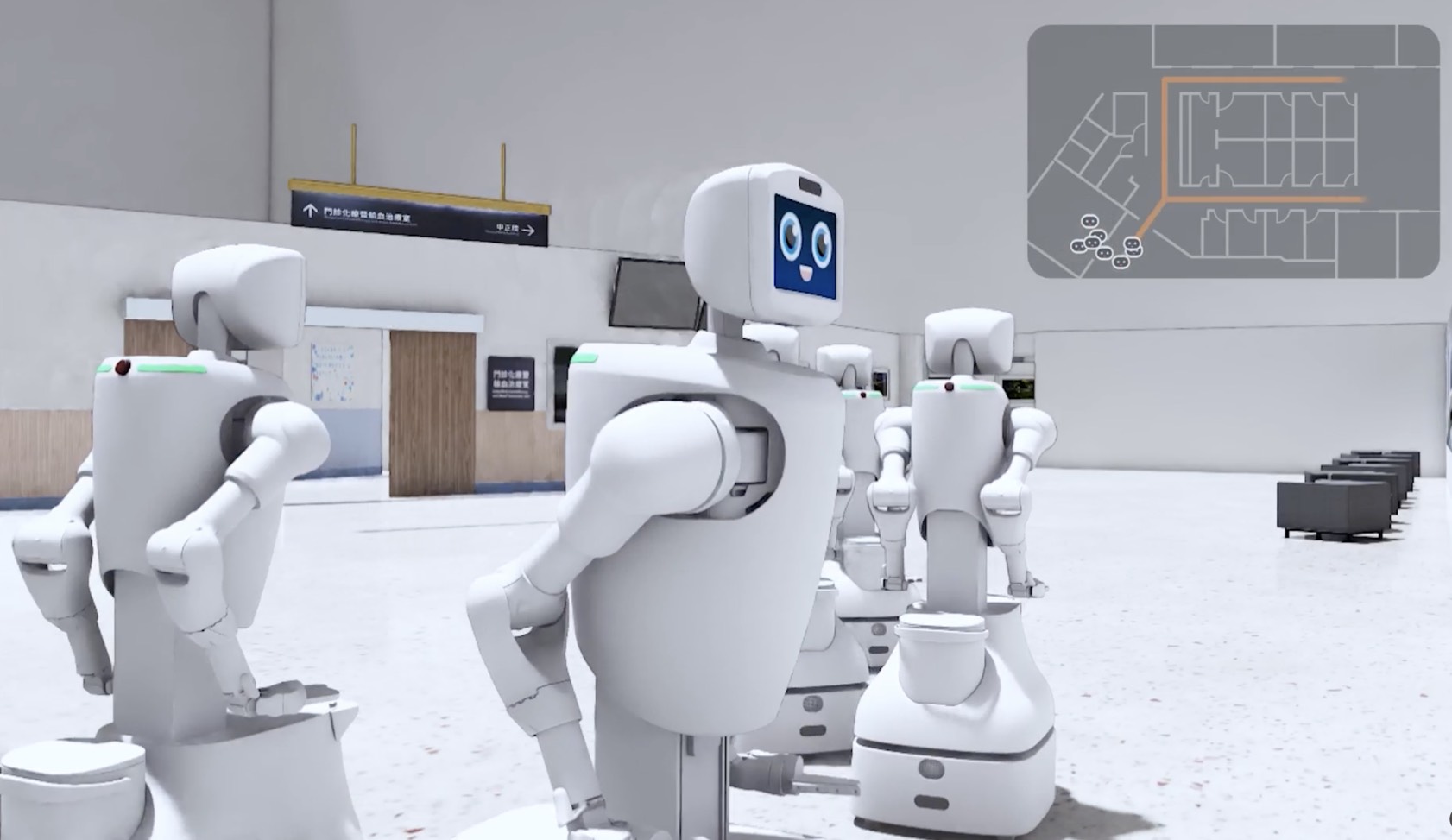
Signals AI data center push into Europe with France's Bull1 June 2026, Taipei, Taiwan – Driving next generation artificial intelligence infrastructure and industrial transformation, Hon Hai Technology Group (Foxconn) (2317) is demonstrating its growing capabilities as a technology manufacturing platform service provider this week at COMPUTEX 2026, with its cutting-edge technology products supporting NVIDIA’s Vera Rubin super-computing platforms, and advances in data center build-out, robotics, healthcare and space. At the same time, Foxconn signaled its readiness to bring comprehensive AI data center solutions to Europe in a new strategic partnership with AI high-performance computing leader Bull. The French company will focus on system design and Foxconn will lead manufacturing. By combining technological expertise and supply chain strengths, the collaboration aims to accelerate the development of AI infrastructure in Europe. Amid strong global growth in the AI sector, Foxconn continues to deepen its AI server deployment and has become an indispensable partner within the global AI supply chain. The world’s largest electronics manufacturer is advancing from an AI server supplier to a “Token Factory” provider, further extending into full AI ecosystem integration. AI Infrastructure At COMPUTEX Booth M0120, Foxconn is showcasing its manufacturing and system integration capabilities for the NVIDIA Vera Rubin NVL72, along with the latest AI server and high-speed interconnect technologies, including: NVIDIA Groq 3 LPX NVIDIA Vera CPU platform NVIDIA HGX Rubin NVL8 platform NVIDIA MGX 2U and 4U modular systems   Foxconn is also a strategic partner in NVIDIA’s DSX Go-To-Market initiative, integrating digital twins, DSX SimReady assets, simulation validation, and modular data center design to accelerate deployment and optimize efficiency of next-generation AI factories. Agentic AI, Edge, and Next-Gen Connectivity This year, Foxconn, together with its partners, is showcasing its latest achievements in the fields of agentic AI, edge computing, and next-generation communications. In collaboration with Intel, exhibits demonstrate the AI Head Node Server, GNR-AP / CWF-AP Server, 1.6T OSFP 2xDR4 high-speed optical communication solution, and next-generation 5G DU Edge Server, further strengthening Foxconn's presence in AI data centers, high-speed networks, and next-generation communications infrastructure. In addition, Foxconn also showcased its collaboration with AMD, including the Ingrasys x AMD solution, the GB2281A platform, and the AMD Instinct™ MI350P PCIe Card. Space Data Centers Together with Ramon.Space, Foxconn is demonstrating related applications and next-generation communication technologies, including solutions such as NuComm, NuPod, NuBox, and edge computing devices. The efforts expand the application of AI infrastructure to fields such as space computing, low-Earth orbit satellite communications, and next-generation data centers. Optical and Core Components Also on display were key optical transmission technologies such as CPO (Co-Packaged Optics), 1.6T optical communication modules, CPC Cable to XPO, and ELSFP for CPO Switch Solution, as well as the latest hardware from L1-L12 manufacturing, including key components such as PCBs, water-cooled plates, and branch pipes, highlighting Foxconn’s vertical integration of AI servers and next-generation data center architecture. AI Compute Applications As one of the few NVIDIA Cloud Partners (NCP) in Taiwan with AI Factory infrastructure capabilities, the supercomputing center led by Foxconn’s Visionbay.ai integrates strengths in AI server manufacturing, thermal solutions, supply chain, and data centers, offering a GPU cloud platform for the AI agent ecosystem. This enables enterprises and developers to rapidly deploy, manage, and scale AI agent applications. AI Models and Agent Systems Running concurrently to COMPUTEX, the NVIDIA GTC Taipei will see Hon Hai Research Institute introduce FoxBrain 2.0, which integrates NVIDIA Nemotron Omni architecture and multimodal training. It evolves from “understanding” to “thinking, planning, and execution,” enabling Physical AI capabilities and extends to Smart Manufacturing, Smart EV, and Smart City, accelerating the implementation of industrial-grade embodied AI. Foxconn also introduced CoDoClaw, a clinical AI agent system built on NVIDIA NemoClaw. Centered around a “lobster agent,” it integrates multiple AI agent capabilities into medical workflows, enabling multi-agent collaboration in intelligent healthcare automation and serving as a “super clinical assistant” for physicians.   Robotics and Physical AI Foxconn’s Nurabot has completed field validation and is being deployed across multiple hospitals and long-term care settings. According to actual deployment data, Nurabot can perform 75 to 80 tasks per day and help reduce the workload of nursing staff by about 30% through clinical support work such as drug delivery and specimen transport. A collaborative surgical robot, that integrates multimodal perception, surgical scene understanding, and task reasoning, is jointly developed with Kawasaki Heavy Industries and partners, utilizing: NVIDIA Isaac for Healthcare (Agent-Ready Rheo Blueprint) NVIDIA Isaac GR00T Vision-Language-Action (VLA) architecture   On the manufacturing side, Foxconn demonstrated a wheeled humanoid robot solution integrating NVIDIA Isaac Teleop, MOMClaw, a teleoperation framework, and Physical AI technology. Applications include precision industrial assembly tasks such as pick-and-place, dual-arm collaboration, and force-controlled screw fastening. The system integrates vision, motion control, path planning, and force feedback, and supports development environments like Isaac Sim, Isaac Lab, and ROS 2, accelerating deployment and enhancing flexible manufacturing automation.
2026/06/01
Foxconn Unveils Physical AI Vision for Next-Generation Smart Hospitals at NVIDIA GTC Taipei at COMPUTEX 2026
2026/06/01
Foxconn Unveils Physical AI Vision for Next-Generation Smart Hospitals at NVIDIA GTC Taipei at COMPUTEX 2026
Integrating AI Agents, Robotics and Digital Twins to Accelerate the Rise of AI-Native Healthcare Infrastructure【Taipei, Taiwan — June 1, 2026】Foxconn (TWSE: 2317) today unveiled its latest Physical AI healthcare vision at COMPUTEX 2026 and NVIDIA GTC Taipei 2026, showcasing how AI agents, collaborative robotics, digital twins and multimodal medical AI are converging to transform real-world hospital operations and accelerate the emergence of next-generation smart hospitals. At a featured session held at the Taipei International Convention Center (TICC), Foxconn B Group President Barry Chiang joined Digital Health User Experience Design Director Alice Lin to present “Empowering Healthcare with Embodied Intelligence: From Nurabot Deployment to Smart Hospital Workflow Transformation.” The session highlighted how Foxconn is leveraging NVIDIA accelerated computing, simulation platforms and AI technologies to bring Physical AI from simulation into real-world clinical environments. As healthcare systems worldwide confront aging populations, workforce shortages and growing clinical complexity, Foxconn is advancing a next-generation healthcare AI ecosystem built upon AI infrastructure, multimodal medical models, embodied intelligence and clinical workflow orchestration. Rather than developing isolated AI tools, Foxconn is integrating AI systems capable of perceiving, reasoning and acting alongside healthcare professionals across hospital environments. Built upon NVIDIA’s “Five-Layer Cake” full-stack AI architecture spanning Energy, Infrastructure, Platform, Models and Applications, Foxconn showcased multiple healthcare innovations powered by technologies including NVIDIA Omniverse, NVIDIA Isaac, NVIDIA Holoscan, MONAI, NVIDIA Nemotron and NVIDIA NemoClaw. Together, these technologies enable the development of AI-native healthcare infrastructure designed to support increasingly autonomous, intelligent and real-world clinical operations.   Among the highlights was Nurabot, Foxconn’s nursing collaborative robot, which completed field validation last year and is now progressively expanding into hospitals and long-term care environments, including Taipei Veterans General Hospital, Tungs’ Taichung MetroHarbor Hospital, as well as overseas nursing education institutions. Real-world deployment data shows Nurabot can execute 75–80 tasks daily and help reduce nursing workload by approximately 30% through medication delivery, specimen transport and other clinical assistance workflows. Foxconn also showcased its scrub nurse collaborative robot, jointly developed with Kawasaki Heavy Industries, Taichung Veterans General Hospital and Yuan High-Tech. The system leverages the NVIDIA Isaac for Healthcare Agent-Ready Rheo Blueprint alongside NVIDIA Isaac GR00T Vision-Language-Action (VLA) architecture to enable multimodal perception, surgical scene understanding and intelligent task reasoning. Since its debut at GTC earlier this year, the project has achieved significant progress in simulation training and surgical workflow validation, with future clinical validation planned to accelerate the development of intelligent human-robot collaboration inside operating rooms. Another major showcase was Foxconn’s “Integrated Chemotherapy Drug Compounding and Delivery System for Smart Hospital Automation,” jointly developed with Taipei Veterans General Hospital, Kawasaki Heavy Industries, Yuyama Manufacturing and FARobot. Built upon real clinical workflows at Taipei Veterans General Hospital, the platform integrates chemotherapy drug compounding, autonomous intra-hospital transport and nursing delivery into a unified intelligent workflow. Powered by NVIDIA Omniverse, the system creates a virtual-physical integrated healthcare environment in which ChemoRo performs high-precision chemotherapy drug compounding, FARobot SMR30 autonomously transports medications within the hospital, and Nurabot supports last-mile delivery to nursing stations and patients. Together, the platform establishes a closed-loop workflow spanning compounding, transport and administration — helping improve operational efficiency, reduce manual workloads and enhance medication safety, traceability and process reliability in high-risk healthcare environments. Foxconn also introduced CoDoClaw, a clinical intelligent agent system built on NVIDIA NemoClaw, an open source blueprintfor deploying autonomous agents, like OpenClaw, with NVIDIA OpenShell for added privacy and security controls . Riding the rapid rise of agentic AI, CoDoClaw advances CoDoctor AI from standalone AI tools into a Multi-Agent Orchestration platform capable of coordinating AI agents across breast cancer screening, ECG analysis, fundus imaging and coronary artery analysis through a unified clinical interface. By connecting AI-driven lesion detection, appointment scheduling, report generation and follow-up management, CoDoClaw demonstrates how clinical AI agents can progressively support cross-department workflow orchestration and future healthcare automation. Foxconn envisions CoDoClaw as a foundational orchestration layer for future AI-native hospitals, enabling medical AI agents, robotics systems and clinical workflows to coordinate through shared operational intelligence. “Healthcare’s next transformation will not come from AI models alone, but from AI systems capable of perceiving, reasoning and acting in real-world clinical environments alongside healthcare professionals,” said Barry Chiang, President of Foxconn B Group and Digital Health. “Foxconn is building the next generation of intelligent healthcare through AI infrastructure, digital twins, embodied intelligence and ecosystem collaboration. We believe Physical AI will fundamentally reshape how hospitals operate and how care is delivered in the future.” Taiwan offers unique advantages for advancing smart healthcare and sovereign AI, combining world-class healthcare and national insurance systems, global leadership in semiconductors and AI infrastructure, and highly integrated clinical environments. Taiwan’s highly digitized healthcare ecosystem also provides an ideal real-world environment for validating Physical AI deployment and sovereign healthcare AI at scale. Through collaboration across government, hospitals and industry, Taiwan has the opportunity not only to address its own healthcare challenges, but also to help shape new operational models for intelligent healthcare worldwide. Moving forward, Foxconn will continue working with NVIDIA and ecosystem partners through the Taiwan Digital Health Alliance (HiMEDt) to accelerate Physical AI deployment across hospitals, long-term care and home healthcare environments, helping position Taiwan as a global showcase for next-generation smart healthcare transformation.
2026/06/01
Hon Hai Technology Group (Foxconn) Announces  First Quarter 2026 Financial Results
2026/05/14
Hon Hai Technology Group (Foxconn) Announces First Quarter 2026 Financial Results
• 1Q26 net profit up 19% on-year, operating profit surges 63% on-year• 1Q26 gross margin and operating profit margin both improve on-year• AI demand driving significant QoQ, strong YoY growth for 2Q26• FY 2026 outlook for strong growth unchanged14 May 2026, Taipei, Taiwan – Hon Hai Technology Group (Foxconn) (TWSE:2317) today announced its first quarter 2026 financial results:Revenue reached a record high of NT$2.12 trillion in the January-March period, while net profit attributable to the parent company totaled NT$49.9 billion, increasing NT$7.8 billion or 19% from the same period a year ago. Earnings per share in the first quarter hit NT$3.56. Looking ahead to the second quarter, although it is traditionally a slow season for the ICT industry, the Group expects to maintain an uptrend due to strong AI demand, with significant quarter-on-quarter growth and strong year-on-year growth. The full-year outlook remains unchanged, maintaining strong growth and providing greater visibility.In the first quarter of 2026, revenue reached NT$2.12 trillion, a year-on-year increase of 29%; gross profit was NT$131 billion, up 30%; operating profit was NT$75.6 billion, surging 63%; and net profit (attributable to the parent company's owners) was NT$49.9 billion, rising 19%. The gross profit margin, operating profit margin, and net profit margin were 6.18%, 3.57%, and 2.36%, respectively, compared with 6.11%, 2.83%, and 2.56% in the same period last year, showing an increase in both gross profit margin and operating profit margin. EPS reached NT$3.56, an increase of NT$0.53 compared with NT$3.03 in the same period last year.Faced with sustained, strong demand for the Group’s AI business, Foxconn Rotating CEO Michael Chiang said that with the ICT industry entering the traditional off-season in the first quarter, coupled with rapid growth in AI server demand, the Cloud and Networking product segment now accounts for nearly 50% of revenue. This demonstrates that the Group’s AI strategy has already brought about a structural transformation, helping to mitigate the seasonality of the ICT industry. At the same time, with a more diversified AI customer base, the Group’s product portfolio has become more balanced.Looking ahead to the Group’s second quarter performance, although the quarter is traditionally a slow season for the ICT industry, expectations are for maintaining an uptrend, with significant growth quarter-on-quarter and strong growth year-on-year, thanks to strong AI demand. The full-year outlook for strong growth remains unchanged. Visibility is higher.The Group's main product segments are Cloud and Networking, and Smart Consumer Electronics. In terms of the former, strong growth is expected both on a quarterly and yearly basis. In terms of the latter, with overall demand better than last year, significant growth is expected.During the investor call, the Group shared how it is building a moat through a sound financial constitution, while at the same time expanding investment and spending. Last year, capital expenditures increased about 27% on-year to NT$174 billion, and should rise more than 30% this year. The investments are primarily focused on regional manufacturing deployment, automation implementation, and upgrade of core capacity.Taking the first quarter as an example, the Group’s EBITDA rose to NT$102.4 billion. This indicates that as the Group actively invests in future growth, its overall financial health is staying robust. Capex is gradually translating into revenue and profit growth ahead.In addition, in terms of enhancing corporate value, the Group’s ROE for the first quarter reached 2.88%, representing a clear improvement compared to the same period over the past two years. This reflects ongoing progress in optimizing the Group’s profitability structure and operational efficiency. As AI-related business grows, as well as benefits materialize from a global footprint and vertical integration, there is further upside potential for ROE.Regarding recent market focus on co-packaged optics (CPO), rotating CEO Chiang said that CPO switches are scheduled to enter mass production in the third quarter, with annual shipments expected to reach tens of thousands of units. Based on current visibility, shipments are projected to grow multi-fold next year.CPO and 1.6T high-end switch products are currently being developed and prepared for mass production in cooperation with major cloud and AI data center customers, with shipments expected to begin in the third quarter. In addition to switch design and assembly, the Group continues to strengthen its capabilities in key components such as optical modules, optoelectronic integration, cables, connectors, high-speed transmission, and power management. By increasing the proportion of in-house production and integration, the Group aims to further enhance system performance, delivery efficiency, and supply chain control.For AI rack shipments, the Group expects to keep high double-digit growth in the second quarter. For the full year, AI rack shipments are projected to more than double, with quarterly volumes increasing sequentially as customer projects progress. In the area of high-speed switches above 800G, driven by growing demand for high-speed networking architectures in AI data centers, related product shipments and revenue this year also have the potential to double.In robotics, one of the key areas in the Group’s “3+3+3” strategy, humanoid robots and collaborative robots have already been introduced in US manufacturing sites in the second quarter. Operational data will be collected to support subsequent model optimization and large-scale deployment. In Smart City, the Group continues to deepen collaboration with local governments and partners, while promoting the export of integrated solutions, aiming to replicate successful experiences across more countries and cities.Lastly, in next-generation communications, the second-generation “PEARL” – Foxconn’s low Earth orbit (LEO) satellites – successfully launched on May 3 aboard a SpaceX Falcon 9 rocket, entering their designated orbit.While the first-generation satellites focused on satellite-to-ground communication experiments and system validation, the latest in orbit are equipped with Ka-band inter-satellite link (ISL) payloads. The two satellites will not only enable broadband communication between satellites and ground stations, but also validate inter-satellite communication between each other.Following the successful launch of the second-generation satellites, the Group will continue to accelerate its expansion in the space sector, focusing on diverse application scenarios such as mobile communication supplements, direct-to-device satellite connectivity, and connectivity in remote areas, further expanding opportunities in LEO satellite technology and smart communications integration.
2026/05/14
Hon Hai Technology Group (Foxconn) Accelerates AI At NVIDIA GTC With Vera Rubin NVL72, Humanoids, Modular Data Center
2026/03/17
Hon Hai Technology Group (Foxconn) Accelerates AI At NVIDIA GTC With Vera Rubin NVL72, Humanoids, Modular Data Center
16 March 2026, San Jose, California, and Taipei, Taiwan – Hon Hai Technology Group (“Foxconn”) (TWSE:2317) today confirmed its unrivalled role in pacing the AI industrial revolution by exhibiting full-system AI server racks for NVIDIA Vera Rubin NVL72 platform, and, for the first time in the United States, unveiling details of its industrial humanoid robots and scalable modular data centers at NVIDIA GTC 2026. Splashing out on technology at the premier conference on artificial intelligence, the world’s largest electronics manufacturer demonstrated its deep collaboration with NVIDIA and its in-house strength in vertical integration with an array of critical components and cutting-edge systems that power NVIDIA Vera Rubin NVL72 platform. “Foxconn’s vertical integration, precision manufacturing and future technologies come into sharp relief when we work with NVIDIA year after year. This powerful partnership enables AI factories to produce intelligence efficiently and reliably for large-scale training, inference, and agentic workloads,” said Foxconn Chairman Young Liu. Double the size of the year before, the Foxconn delegation, with over a hundred executives, engineers and scientists, at San Jose this year brings expertise on the latest advances in AI factories and physical AI, sharing the newest innovations for NVIDIA HGX and NVIDIA MGX platforms. At GTC Booth 1921, the end-to-end NVIDIA AI Factory Ecosystem showcase features Foxconn’s key building blocks across mechanical design, cooling components, and power delivery that come together to accelerate integration and support rapid deployment. Foxconn will support the latest NVIDIA RTX PRO™ 4500 Blackwell Server Edition GPUswith new servers to power demanding data processing, AI, video and visual computing workloads. For the first time in the United States, Foxconn unveiled details of its AI-powered industrial humanoid robot being developed in collaboration with NVIDIA. Both at Foxconn’s booth and GTC sessions – “Develop Physical AI Applications and Build Data Factories With the Robotics Ecosystem” and “Building and Scaling AI Factories With Digital Twins and Robotics” – Foxconn experts show how the robots autonomously execute high-precision, repetitive industrial operations – including pick-and-place, screw fastening, and material handling – demonstrating reliability and operational efficiency in real-world conditions. The robotic skills derived from actual factory scenarios are the result of combining simulation-based training with on-site iteration, leveraging NVIDIA Isaac GR00T, NVIDIA FoundationPose, NVIDIA Isaac Sim and NVIDIA Jetson Thor, to enable rapid deployment and scalable rollout across manufacturing facilities. Meanwhile, the modular data center, or MDC, redefines scalability. Foxconn, with partners, are launching a new generation of AI-ready modular and hybrid architectures to meet demand from new-generation AI models for ultra-high-density compute power and electrical infrastructure. Through highly standardized and modular designs – see a small-scale model at Booth 1921 – the complex construction of an AI data center is transformed into a replicable and expandable industrialized solution, accelerating the journey for enterprises from building compute power to realizing the business value of AI. Foxconn’s Visionbay.ai, as an NVIDIA Cloud Partner (NCP), strategically collaborates with ecosystem leaders, enabling a unified “AI+Workflow” deployment architecture – bridging foundation models, platforms, applications, and compute infrastructure. Executing a global AI infrastructure strategy exceeding 1GW of deployed capacity, Foxconn is scaling from Taiwan into strategic regions worldwide, establishing strong foundations for sovereign AI. Another capability on display at GTC is Genesis, Foxconn’s WEF-recognized AI initiative. Powered by NVIDIA Omniverse and Foxconn FactoryGPT, Genesis demonstrates a fully integrated digital-physical factory. Visitors experience how AI simulates optimal strategies within digital twins and feeds decisions back to real-world production lines – forming a continuous closed-loop optimization cycle. In Smart City, Foxconn’s CityGPT integrates with NVIDIA Metropolis to advance AI-powered transportation and safety, while Smart EV features enhancing ADAS capabilities involving FoxBrain, the Group’s proprietary, traditional Chinese large-language model. Foxconn’s integrated healthcare AI ecosystem on exhibit focuses on four clinical domains, including scrub nurse collaborative robotics, colonoscopy Agentic AI, cardiovascular digital twins, and multimodal precision treatment for breast cancer. These take medical AI from standalone model applications to a fully realized agentic AI healthcare system – capable of perception, reasoning, and action – enabling scalable clinical innovation. On March 17, GTC session Accelerate Hybrid Quantum-Classical Research at Scale With NVIDIA CUDA-Q is dedicated to breakthroughs in quantum by the Hon Hai Research Institute, Foxconn’s R&D powerhouse looking at future technologies. Information on exhibit hall and hours can be found here. Foxconn GTC sessions and visit Booth 1921 1.    Building and Scaling AI Factories With Digital Twins and Robotics [S81508] 2.    Develop Physical AI Applications and Build Data Factories With the Robotics Ecosystem [S82100] 3.    Accelerate Hybrid Quantum-Classical Research at Scale With NVIDIA CUDA-Q [S82043]     About Foxconn Established in 1974 in Taiwan, Hon Hai Technology Group (“Foxconn”) (TWSE:2317) is the world’s largest electronics manufacturer and leading technological solutions provider, ranking 28th among the Fortune Global 500. In 2025, revenue, unaudited and consolidated, totaled TWD8.099 trillion (approx. USD260 billion). The Group’s market share in electronics manufacturing services (EMS) exceeds 40% and covers four major product segments: smart consumer electronics; cloud and networking; computing; and components and other. The Group operates over 230 campuses across 24 countries and is one of the world’s largest employers with approx. 900,000 employees during peak manufacturing season. The Group has expanded its capabilities into the development of electric vehicles, digital health, and robotics, and three key technologies – artificial intelligence, semiconductors and next-generation communications technology. Pulling it together with its three intelligent platforms – Smart Manufacturing, Smart EV, Smart City – the “3+3+3” strategy is key to driving the Group’s long-term growth. Foxconn is dedicated to championing environmental sustainability in the manufacturing process and serving as a best-practice model for global enterprises. To learn more, visit www.honhai.com
2026/03/17
Hon Hai Technology Group (Foxconn) Announces FY2025 & 4Q25 Financial Results
2026/03/16
Hon Hai Technology Group (Foxconn) Announces FY2025 & 4Q25 Financial Results
·       Revenuefor4Qandfull year2025 atrecord highs ·       CashdividendofNT$7.2arecord highsincelisting,payoutratio 52.9% ·       AIserversectortoseestronggrowthin 2026 ·       AIiscoredrivingforceinnew5-yeartransformationstrategy 16 March 2026, Taipei, Taiwan – Hon Hai Technology Group (“Foxconn”) (TWSE:2317) today announced its full year and fourth quarter 2025 financial results. Full-year net profit (attributable to the parent company) totaled NT$189.3 billion and EPS of NT$13.61 reached a record high since its listing in 1991. ROE hit 11.25%, further improving overall profitability. The company also announced a cash dividend of NT$7.2 per share this year, a record high since its listing in 1991, representing a payout ratio of 52.9%, marking the seventh consecutive year that the payout ratio has exceeded 50%. Despite significant changes in tariff policies, geopolitics, and global monetary policies, the AI server sector is expected to see strong growth in 2026. At the same time, the Group also unveiled its five-year plan, focusing on AI as the core driver and three major transformation strategies: Foxconn 1.0 – Operational Excellence; Foxconn 2.0 – Intelligence-Driven Growth; and Foxconn 3.0 – Platform Value Creation. Foxconn’s 2025 full-year revenue reached NT$8.1 trillion, a year-on-year increase of 18%; gross profit reached NT$498.2 billion, up 16% for the same period; operating profit at NT$259.2 billion, rose 29% on year; and net profit (attributable to the parent company) reached NT$189.4 billion, increasing 24%. The profit growth rate exceeded the revenue growth rate, representing best practice for maximizing the Group's profitability. Gross profit margin, operating profit margin, and net profit margin were 6.15%, 3.20%, and 2.34% respectively, compared to 6.25%, 2.92%, and 2.23% in the previous year. This shows that although high-priced AI products diluted the gross profit margin, the operating profit margin steadily grew to over 3%, and profitability of the core business benefited significantly from AI products, resulting in EPS reaching NT$13.61, an increase of NT$2.60 from the previous year. In the October-December quarter, revenue totaled NT$2.61 trillion, a 22% increase from the same period a year ago; gross profit at NT$153.3 billion, was up 17% at the same time; operating profit at NT$85.6 billion, rose 33% on-year; while net profit (attributable to the parent company) at NT$45.2 billion, fell 2% from a year ago. Gross profit margin, operating profit margin, and net profit margin were 5.88%, 3.28%, and 1.73%, respectively, compared to 6.15%, 3.03%, and 2.17% for the same period a year ago. The improved operating profit margin indicates enhanced profitability in the core business. EPS reached NT$3.23, down NT$0.11 from the previous year. Looking at the fourth quarter's operating performance, Foxconn Chairman Young Liu stated that both the fourth quarter and the full year saw record-breaking revenue, exceeding expectations and achieving strong growth. The Group's full year revenue reached NT$8.1 trillion, a record high. Notably, revenue from cloud and networking products surpassed that of smart consumer electronics products for the first time even during the traditional peak season for ICT products, becoming the largest product category in the quarter. Based on the Group's target of an average cash dividend payout ratio of no less than 40%, Chairman Liu announced this year's cash dividend per share will be NT$7.2, a significant increase from NT$5.8 per share last year, with a payout ratio of 52.9%, a new high since the company's listing in 1991, and exceeding 50% for seven consecutive years. The market is paying close attention to the Group's performance in cloud and networking products and smart consumer electronics products in 2026. Chairman Liu pointed out that with the unprecedented expansion of capital expenditures by large global CSPs, Foxconn, as the world’s largest AI server provider, will definitely seize this opportunity. As production capacity gradually comes online, AI servers will maintain strong growth. Regarding smart consumer electronics products, addressing market concerns about memory shortages and price increases, Chairman Liu stated that the Group's product portfolio is mainly composed of high-priced models, and the impact is currently observed to be relatively limited. Demand, as originally seen, remains unchanged, and visibility is gradually improving, with significant growth expected this year. Regarding the financial indicators that investors are highly concerned about, Chairman Liu stated that the "Enterprise Value Enhancement Plan" approved by the board of directors Monday incorporates targets such as operating profit margin and ROE into its core commitments in order to actively respond to investors' expectations for improved long-term profitability. ROE has been around 9% in 2023 and 2024. With deeper vertical integration of components, emerging economies of scale, and growing contribution of the AI business, overall profitability further improved in 2025, with ROE reaching 11.25% to steadily move towards a near-term target of 12%. As the global industry stands at the starting point of the new AI era, Foxconn, based on its three-stage transformation plan proposed five years ago – F1.0 Existing Business Optimization, F2.0 Digital Transformation, and F3.0 Transformation To New Industries – is using AI as the core driving force to promote the Group's upgrade through three major transformation strategies: Foxconn 1.0 Operational Excellence; Foxconn 2.0 Intelligence- Driven Growth; and Foxconn 3.0 Platform Value Creation Chairman Liu stated, "Our goal is clear: to transform Foxconn from the world's most important technology manufacturing partner into the most trusted industrial platform in the AI era. This will be the core direction of Foxconn's next stage of growth and the key to continuously creating long-term value for our shareholders."
2026/03/16
2026 Taiwan Foxconn Ladies Golf Tournament Returns  With New Branding, Record US$2 Million Purse, Japan Tour
2026/01/14
2026 Taiwan Foxconn Ladies Golf Tournament Returns With New Branding, Record US$2 Million Purse, Japan Tour
14 January 2026, Taipei, Taiwan – The LPGA of Taiwan (TLPGA) and the Japan Ladies Professional Golfers’ Association are thrilled to announce the “2026 Taiwan Foxconn Ladies Golf Tournament” on the official circuit of JLPGA for this year, bringing Asia’s most lucrative women’s golf tour to Taiwan for the first time in nearly half a century and an elite line-up of athletes vying for a record US$2 million purse. Stepping up the game, the competition – re-branded from Foxconn TLPGA Players Championship of the past two years – will see the return of title sponsor Hon Hai Technology Group (Foxconn), the world’s largest electronics manufacturer and leading technological solutions provider, and special sponsor for the first time, Japanese technology powerhouse SoftBank Corp. Producing topflight golfers, including Hisako Higuchi and Ai Miyazato, the JLPGA was a sweet spot for Taiwan’s own golf legend Ai-yu Tu, who once swept 71 championships and was a 7x money-title winner on the JLPGA Tour, accumulating over 110 wins in her career and inducted into the Japanese Golf Hall of Fame. Ms Tu is a special advisor for the 2026 Taiwan Foxconn Ladies Golf Tournament. TLPGA Chairwoman Huang Pi-hsun said: "Ms Tu’s glorious achievements on the JLPGA Tour have been a source of pride for Taiwan. I am grateful for Foxconn's support, which has allowed this dream tour to return to Taiwan after 48 years, giving young players a stage to challenge the world." JLPGA Vice President Takako Matsuo said: "Over the past two years, we have witnessed TLPGA and Foxconn successfully taking the game to an elite playing level. As one of Asia’s flagship tournaments this year, we very much look forward to bringing Japanese players to Taiwan in March for high-level competition." The total purse is the second-highest in the JLPGA Tour for 2026 and another record for the Foxconn-sponsored tournament since it was inaugurated in 2024. Originally established as a players championship, the competition has set itself apart with its exceptional ranking points, substantial prize money, and elite sportsmanship. The 2026 Taiwan Foxconn Ladies Golf Tournament will be held March 12-15 at the Orient Golf & Country Club in Taoyuan. Follow the action and stay updated through the tournament’s official Facebook and on Foxconn’s official Instagram. About TLPGA here. About Foxconn here.
2026/01/14
Foxconn and Pace CCS Announce Milestone in Development of a Chemical Scavenger to Prevent Corrosion in CCS Networks
2026/01/05
Foxconn and Pace CCS Announce Milestone in Development of a Chemical Scavenger to Prevent Corrosion in CCS Networks
Hon Hai Technology Group (“Foxconn”) (TWSE:2317), world’s largest electronics manufacturer and leading technological solutions provider, and Pace CCS, the global leader in carbon capture and storage (CCS) design, today announced a major step in solving a key challenge for the CCS industry. The companies have begun operations at a new laboratory in Taipei to develop a chemical injection unit to prevent corrosion in CCS networks. This partnership combines Foxconn’s expertise in precision manufacturing with Pace CCS’s specialized design knowledge. It demonstrates how cross-industry collaboration can advance the shared goal of fighting climate change. Carbon capture and storage is a critical technology for achieving Net Zero emissions. The global demand for carbon capture is estimated at eight billion metric tons of CO2 annually, requiring trillions of dollars in investment. A key technical challenge is protecting CCS infrastructure from corrosion. Chemical reactions within the CO2 stream can create corrosive products such as sulfuric acid and nitric acid. These reactions can also produce water and solids, which lead to corrosion, erosion, and clogged disposal wells. The new laboratory will prove the efficacy of a chemical scavenger, already used in industries including semiconductor manufacturing. The goal is to show it can prevent the formation of these damaging acids and water under real-world CCS conditions. “This is the solution the CCS industry has been waiting for,” said Matthew Healey, Pace CCS Managing Director. “By turning a major technical challenge into a simple operational expense, we’re accelerating global CCS deployment.” “Foxconn is proud to bring our supply chain expertise to the energy transition,” said Ron R. T. Horng, Foxconn’s Chief Environment Officer. “This collaboration shows how cross-industry partnerships can drive meaningful progress against climate change.”   About Foxconn Established in 1974 in Taiwan, Hon Hai Technology Group (“Foxconn”) (TWSE:2317) is the world’s largest electronics manufacturer and leading technological solutions provider, ranking 28th among the Fortune Global 500. In 2024, revenue totaled TWD6.86 trillion (approx. USD208 billion). The Group’s market share in electronics manufacturing services (EMS) exceeds 40%. The Group operates over 230 campuses across 24 countries and is one of the world’s largest employers with approx. 900,000 employees during peak manufacturing season. The Group has expanded its capabilities into the development of electric vehicles, digital health, and robotics, and three key technologies – artificial intelligence, semiconductors and next-generation communications technology. Pulling it together with its three intelligent platforms – Smart Manufacturing, Smart EV, Smart City – the “3+3+3” strategy is key to driving the Group’s long-term growth. Foxconn is dedicated to championing environmental sustainability in the manufacturing process and serving as a best-practice model for global enterprises. To learn more, visit www.honhai.com   About Pace CCS Pace CCS are the global leaders delivering design for CCS projects, with experience with well over 100 CCS projects worldwide. Pace CCS are based in London and Kuala Lumpur. To learn more, visit www.paceccs.com.
2026/01/05
Hon Hai Research Institute Supports Australian Quantum Software Network Micro & MesoGrant Scheme to Foster Emerging Quantum Research
2025/12/18
Hon Hai Research Institute Supports Australian Quantum Software Network Micro & MesoGrant Scheme to Foster Emerging Quantum Research
18 December 2025, Taipei, Taiwan – The Hon Hai Research Institute (HHRI) is pleased to announce the successful completion of Round 1 of the Australian Quantum Software Network (AQSN) Micro & MesoGrant Scheme. In this inaugural round, HHRI, as the key sponsor, awarded more than AUD 150,000 in competitive funding to support early-career and mid-career researchers across Australia in advancing quantum software and algorithmic research. The AQSN MicroGrant / MesoGrant programs are funding schemes designed to support research in quantum algorithms, quantum software, and quantum theory. AQSN members—including students and researchers—may apply. The MicroGrant is suitable for short-term or early-stage open-source projects, while the MesoGrant supports mid-scale or collaborative research efforts. Funded projects typically run for 6–12 months and require outcomes to be open-sourced and publicly shared, fostering collaboration and knowledge exchange within the quantum software community. AQSN founder and Review Committee member Dr. Simon Devitt stated: ”We sincerely appreciate the support from the Hon Hai Research Institute’s Quantum Computing Research Center and the enthusiastic participation of the Australian quantum research community. Congratulations to all the award recipients. HHRI’s generous sponsorship has enabled AQSN to empower the next generation of quantum pioneers and to build a vital bridge between academic excellence and industrial impact. We are honored to collaborate with HHRI in establishing a strong software foundation for the quantum era.” Dr. Min-Hsiu Hsieh, Director of HHRI’s Quantum Computing Research Center, said:“Scientific breakthroughs often originate from a small yet bold idea. At the Hon Hai Research Institute, we are committed to becoming a catalyst for innovation. By supporting AQSN’s young scholars, we hope to inject fresh momentum into the field of quantum computing. This collaborative initiative represents HHRI’s commitment to nurturing the next generation of quantum talent, and we look forward to seeing students and researchers become key forces driving global quantum technology development.” A total of 9 projects were selected, including six MicroGrants and three MesoGrants fully sponsored by HHRI. These projects reflect the depth and creativity of Australia’s quantum research community, ranging from foundational theory to practical algorithmic development. The successful recipients and their project topics are listed below: MesoGrant Recipients 1.       Clément Canonne (University of Sydney) — Towards Understanding Which Quantum Circuits Can Be Classically Sampled 2.       Harini Hapuarachchi (RMIT University) — Towards a Unified Software Toolkit to Simulate Noise in Diamond-Based Room-Temperature Spin Qubits 3.       Angus Southwell (Monash University) — Quantum Gibbs Sampling via Simplicial Complexes MicroGrant Recipients 1.       Jonas Freiheit (RMIT University) — Optimising Encoding & Readout for Quantum Reservoir Computing Based on Quantum Ising Models 2.       Elija Perrier (University of Technology Sydney) — Coherent Learning for Quantum Agents 3.       Abhinash Kumar Roy (Macquarie University) — Resource-Efficient Characterisation of Multi-Time Quantum Processes 4.       Varun Srivastava (Macquarie University) — Randomised Benchmarking as a Diagnostic for Non-Markovian Noise and Fault-Tolerance Thresholds 5.       Mingyu Sun (University of Technology Sydney) — Scalable Fidelity Estimation and Learnability from Local Measurements 6.       Tianhui Zhu (UNSW) — Implementing Virtual Distillation with Quantum Algorithms HHRI extends its gratitude to the AQSN assessment committees and the entire Australian quantum research community for their enthusiastic participation. Congratulations to all awardees. Hon Hai Research Institute remains committed to supporting quantum research and innovation worldwide, fostering academic collaboration, and accelerating the development of next-generation quantum technologies. We look forward to supporting future rounds of this scheme and the exciting research that will emerge as a result. About Hon Hai Research Institute The institute, founded in 2020 and part of Hon Hai Technology Group (Foxconn), has five research centers. Each center has high technology R&D professionals, all of whom are focused on the research and development of new technologies, the strengthening of Foxconn’s technology and product innovation pipeline, efforts to support the Group’s transformation from "brawn" to "brains", and the enhancement of the competitiveness of Foxconn’s "3+3+3" strategy. To learn more, visit https://www.hh-ri.com
2025/12/18
Taxi, Cargo Van or Family Ride, ‘MODEL A’ Offers Versatile E-mobility From Hon Hai Technology Group (Foxconn)
2025/11/21
Taxi, Cargo Van or Family Ride, ‘MODEL A’ Offers Versatile E-mobility From Hon Hai Technology Group (Foxconn)
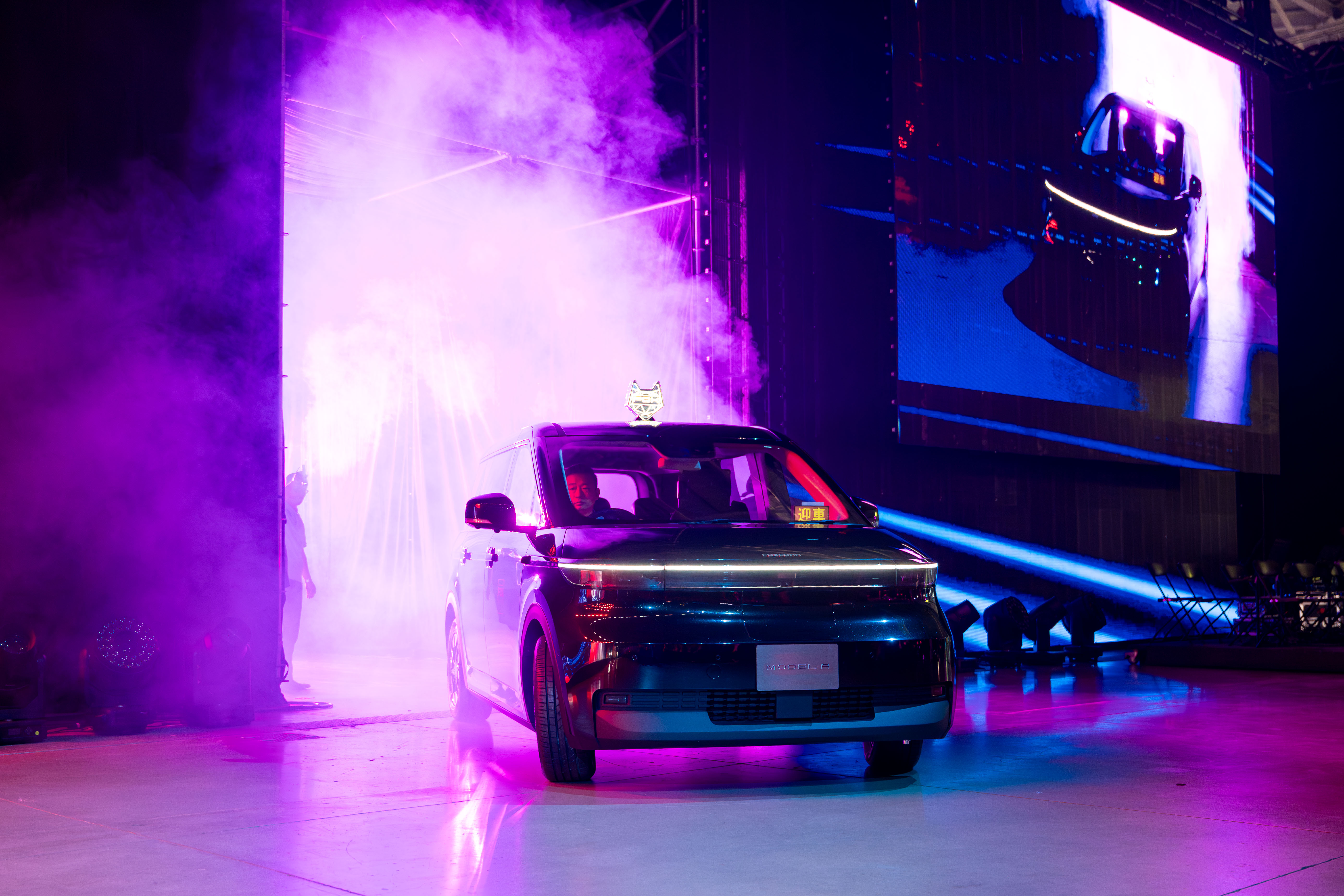
21 November 2025, Taipei, Taiwan – Hon Hai Technology Group (“Foxconn”) (TWSE: 2317), the world's largest technology manufacturer and service provider, on Friday detailed its latest progress in electromobility that combines artificial intelligence technology and modular versatility to bring diverse application scenarios to a single reference electric vehicle – the MODEL A. Presented for the first time on stage at Hon Hai Tech Day 2025, the MODEL A is a B segment vehicle, offering B2B customers a choice of seating configurations from single to eight seats, suitable for small families and multi-generational trips. Its highly flexible interior space, coupled with compatible sliding and side-opening doors, means the same reference model can cater, as well, to the needs of taxis, commercial vans, or last-mile delivery in logistics. “This is more than just a single model. It is a symbol of collaboration and innovation in the EV industry,” said Jun Seki, Foxconn Chief Strategy Officer for EV, with three different MODEL A’s on the HHTD25 stage. Its design philosophy of "Being White" emphasizes purity and flexibility, blending Japanese aesthetics with scalability to adapt to various scenarios and needs. The spaciousness and convenience with strong battery and motor performance and semi-zonal control follow extensive research by Foxconn’s Japanese EV development team of local market tastes and work-life needs of users in the Japan market. The MODEL A, which stands for affordable development, utilizes off-the-shelf components to achieve Time To Cost and Time To Market goals. Depending on customer timelines, MODEL A is expected to initially launch in the Japanese market in 2027 with potential adoption later in Southeast Asia. The new design concept incorporates Smart Battery Management and Smart Thermal Management to extend battery life and achieve an optimal balance between comfort and battery consumption. The MODEL A can be equipped with Foxconn's self-developed LiDAR technology, showcasing the future potential of ADAS/AD systems. For commercial vehicle use, the MODEL A's smart cockpit features Smart Translation, supporting multilingual communication. Through an immersive in-car audio experience, the "mobile room" concept is embodied, echoing SHARP Corp's the "LDK+" philosophy showcased at the Japan Mobility Show in October. This not only enhances vehicle performance and usability but also provides flexible solutions for various usage scenarios. About Foxconn Established in 1974 in Taiwan, Hon Hai Technology Group (“Foxconn”) (TWSE:2317) is the world’s largest electronics manufacturer and leading technological solutions provider, ranking 28th among the Fortune Global 500. In 2024, revenue totaled TWD6.86 trillion (approx. USD208 billion). The Group’s market share in electronics manufacturing services (EMS) exceeds 40%. The Group operates over 230 campuses across 24 countries and is one of the world’s largest employers with approx. 900,000 employees during peak manufacturing season. The Group has expanded its capabilities into the development of electric vehicles, digital health, and robotics, and three key technologies – artificial intelligence, semiconductors and next-generation communications technology. Pulling it together with its three intelligent platforms – Smart Manufacturing, Smart EV, Smart City – the “3+3+3” strategy is key to driving the Group’s long-term growth. Foxconn is dedicated to championing environmental sustainability in the manufacturing process and serving as a best-practice model for global enterprises. To learn more, visit www.honhai.com
2025/11/21
Visionbay.ai Launches Taiwan Sovereign AI Supercomputing Center with NVIDIA GB300 Infrastructure
2025/11/21
Visionbay.ai Launches Taiwan Sovereign AI Supercomputing Center with NVIDIA GB300 Infrastructure
New AI Factory Infrastructure Supports Scalable Enterprise-Grade Computing to Support Taiwan’s Leadership in AI 【21 November 2025, Taipei, Taiwan】At this year’s Hon Hai Tech Day (HHTD25), Visionbay.ai by Hon Hai Technology Group’s (Foxconn) (TWSE 2317) dedicated business unit for AI supercomputing and cloud operations—made its first public debut, announcing plans to build Taiwan’s largest GPU cluster as well as its first supercomputing center deployment built on NVIDIA GB300 NVL72. The NVIDIA GB300 NVL72 systems are scheduled to come online in the first half of next year, marking a significant acceleration in Taiwan’s sovereign AI infrastructure development. Visionbay showcased its latest “AI Supercomputing Center & Operations Platform”, demonstrating vertically integrated capabilities across every layer of the AI value chain. The platform introduces a comprehensive end-to-end AI Factory solution—from AI infrastructure to application-layer integration services. This milestone marks a new chapter for Taiwan in the global AI race and positions. Visionbay as a core engine of Foxconn’s long-term “3+3+3” strategy, driving sovereign AI development and enabling large-scale industrial transformation. The CEO of Visionbay.ai, Neo Yao emphasized, “To stay competitive in the AI era, Taiwan must rapidly establish scalable and cost-effective AI infrastructure. Only with strong, accessible compute can we accelerate AI adoption, expand industry applications, and cultivate a world-class environment for AI talent and innovation.” By integrating Foxconn’s strengths in component manufacturing, server R&D, supply-chain integration, cooling technology, and LLM development, Visionbay addresses the key challenges enterprises face—including compute shortages, rising self-build costs, and the lack of a truly enterprise-ready AI integration platform. In a fireside conversation with NVIDIA DGX Cloud Vice President Alexis Bjorlin, both leaders highlighted a major shift in enterprise AI strategy: Enterprises can speed development and deployment of AI by adopting an “existing workflows + AI” approach, shortening the time from AI experimentation to full-scale deployment. The session also underscored the increasing importance of secure, sovereign, local supercomputing enabling enterprises to maintain data residency, safeguard domain knowledge, and reduce dependency on overseas compute resources. The business model of Visionbay centers on a comprehensive AI Factory ecosystem, offering GPUaaS compute leasing, NVIDIA-native software solutions, and a cloud-based AI App Store. By gaining instant access to high-performance training, fine-tuning, development, and inference capabilities, enterprises can adopt AI with minimal barriers—powered by NVIDIA next-generation accelerated computing architecture. Looking ahead, Visionbay will continue advancing its full-stack AI service capabilities under its mission of “Empowering the Future of AI”. In partnership with government, industry, academia, and startups, Visionbay aims to build the next generation of AI-driven future—starting from Taiwan.  About Visionbay.ai (“Visionbay”) Visionbay.ai is [A1] the Hon Hai Technology Group’s dedicated business unit for supercomputing and cloud-AI operations. With a mission to empower Asia’s AI ecosystem, Visionbay integrates national-level computing infrastructure with Hon Hai’s deep strengths in manufacturing, design, and supply-chain orchestration. Its end-to-end AI Factory solutions span high-performance compute, cloud operations, supply-chain integration, AI model and tool development, and an AI App Store. Visionbay helps enterprises accelerate digital and AI transformation while building a trusted and sustainable sovereign-AI ecosystem. To learn more, visit www.honhai.com/Visionbay.ai  About Hon Hai Technology Group (“Foxconn”) Established in 1974 in Taiwan, Hon Hai Technology Group (“Foxconn”) (TWSE: 2317) is the world’s largest electronics manufacturer and leading technological solutions provider, ranking 28th among the Fortune Global 500. In 2024, revenue totaled TWD 6.86 trillion (approx. USD 208 billion). The Group’s market share in electronics manufacturing services (EMS) exceeds 40%. The Group operates over 230 campuses across 24 countries and is one of the world’s largest employers with approx. 900,000 employees during peak manufacturing season. The Group has expanded its capabilities into the development of electric vehicles, digital health, and robotics, and three key technologies – artificial intelligence, semiconductors and next-generation communications technology. Pulling it together with its three intelligent platforms – Smart Manufacturing, Smart EV, Smart City – the “3+3+3” strategy is key to driving the Group’s long-term growth. Foxconn is dedicated to championing environmental sustainability in the manufacturing process and serving as a best-practice model for global enterprises. To learn more, visit www.honhai.com
2025/11/21